
ANNUAL PROJECT PROGRESS REPORT
On
Sanitation, Water Supply and Poverty Alleviation Program
(June’ 2024-May’ 2025)
Submitted to:
Manos Unidas, Spain.
Submitted by:
Rural Vision (RV),
Boro Boyra Rayer Mahal School Road,
Khulna-9000, Bangladesh.
Mobile:88-01711-273418,
Web:www.ruralvisionbd.com
E-mail:ruralvision@hotmail.com
ANNUAL PROJECT PROGRESS REPORT
On
Sanitation, Water Supply and Poverty Alleviation Program
(June’ 2024-May’ 2025)
Introduction:
Rural Vision (RV) is an NGO, establish in 1995, has been working in the field of rural development for the socio-economic upliftment of the rural poor people, especially the women, children, marginal farmers, fishermen and has been implementing different kind of development activities since its inception. RV has already developed a good name and fame in the operational areas for its appreciable activities and development initiatives and also have created a very good acceptance among the community people and also has built a congenial relationship with the local administrations and government departments. RV is gradually marching forward to achieve it set goals and objectives benefiting the poverty-stricken and disadvantaged people, especially the women folk and the children of the community.
Rural Vision (RV) has been implemented a three (3) year project named “Sanitation, Water Supply and Poverty Alleviation Program” from June’ 2022 to May’ 2025 with the financial support of Manos Unidas-Spain. In the mean time the program time has completed. Already we have submitted the first year’s and second year’s progress reports to the donor for information, and this is the third year implementing report. According to contract agreement, we have to submit the third year’s progress report to the donor. So, the third year’s project progress report has prepared and submitting to the donor agency for information and necessary action. The project activities of third year had been implemented smoothly, fruitfully and effectively as per project plan basing the experience and skilled gathered from the previous years’ project implementation, because, we have learnt a lot from the last two years’ project implementations, where there were successes, fruitfulness and failures also from which we had learnt for rectify. The project implementation has benefited the project participants i.e. women group members of the water logged and low-lying areas. The successful and effective implementation of the project has benefited a good number of targeted community people in both first year, second year and third year, which have been appreciated by the beneficiaries, local administrations and government departments, because, it has solved much water and sanitation problems of the poor people in the working areas, which created a positive impact among the community people and other stakeholders. Not only that many people from outside areas have been motivated and they are using sanitary latrines and water filter to save them from different water borne diseases.
Mainly the project was planned to solve the water and sanitation problems of the waterlogged and low-lying areas, because, in the project areas, the main problems were want of pure drinking water, lack of sanitation facilities, lack of peoples’ awareness on water and sanitation, where government and other supports were absent due to hardship communication, remoteness, water logging and lack of proper leadership, so, the people, especially the poor women, disables and children were suffering much from different diseases and the mortality rate is too high in the working areas than the national average. With the help of the project implementation, many problems have been overcome but still there are problems, because, It needs time to overcome the problems permanently. Already people have become realised the needs of the project and they are cooperating much, as they are getting much benefits from the project implementation. Gradually the people are becoming habituated with use of sanitary latrines and tube well water, because, so far, they had been using pond water and discharging stools and urines in open places, which created many kinds of diseases among the community people and occurred undue deaths. Now, those problems are solving with the implementation of the project and it needs more time to solve all the problems and habituated the people with water and sanitation practices.
It is mention able here that the project activities had become smoother and more effective due to last two years’ experiences, gained skills, learning from failures etc. and due to the dedication of the project staffs, organisational staffs, Executive Committee members and their valuable advice and suggestions. It is also mentionable here that the local administrations, government departments, local elite, community people and local administrations have cooperated us all respects considering the project benefits and also the Venerable Bishop and local Rev. Father have been guided us to implement the project activities successfully through providing proper and valuable guidance, suggestions and advice. We are very much thankful and grateful to them. We think from previous learning and experience, the third year’s project implementation was better, effective and matured than previous years and this is the project progress report of the third year’s project implementation and hope, the report will reflect the progresses of the third year’s project implementation, which activities have been carried out during the third year.
Name of the project : Sanitation, Water Supply and Poverty Alleviation Program
Reporting period : June 1, 2024 to May 31, 2025
Project Year : Three (3) years.
June’ 2022-May’ 2025
Project areas : According to the project areas set in the project proposal, the activities had been implemented and continue Budhata, Durgapur , Sobhnali, Borodol and Assasuni Unions of Assasuni Upazilla of Satkhira District.
| District | Upazilla | Union | No. of Village |
| Satkhira | Assashuni | Budhhata | 10 Nos. |
| Durgapur | 05 Nos. | ||
| Sobhnali | 05 Nos. | ||
| Borodol | 05 Nos. | ||
| Assasuni | 05 Nos. | ||
| Total : | 1 | 5 | 30 |
Project supporting Agency: Manos Unidas, Spain.
Project implementing NGO:
Rural Vision (RV),
Boro Boyra Rayer Mahal School Road,
Khulna-9000, Bangladesh.
Mobile:88-01711-273418,
Web:www.ruralvisionbd.com
E-mail:ruralvision@hotmail.com
Project Office:
Budhhata Bazar
Assasuni Upazilla, Satkhira District.
From the implementation of the previous years’ project activities, we have learnt a lot from the successes, problems, difficulties and failures, because, in the first year and second year, we had to face lot of limitations, problems, and we have sufficient learning from those problems and difficulties, because, we had to cover and overcome those for fruitful implementation and benefiting the poor targeted people in the water logging areas. As, the staffs and related personnel have sufficient learning, so, it was easier to implement the third year’s project activities and basing the learning, experiences and gained skills and also gradually the community people accepted the project activities and cooperated much to reach its goals and objectives. The second year’s project activities have been carried out according to the plan and target of the project for third year and to achieve project goal and objectives of the third year, RV arranged a workshop with its staffs, where they analyzed the successes, failures, problems etc. and how to proceed for third year and been carried out the following selected activities in the said operational areas for the poor group members and community women during the reporting period from June’ 2024 to May’ 2025.
As the donor Manos Unidas has provided prescribed format for reporting, so we are submitting the third year’s annual progress report on the format according to their questionnaires and we hope, the report will reflect the actual implementations of the project components and actual picture of the project progresses during the second year. The project activities have been carried out considering the project plan and target, which have been included in the budget. Before starting the implementation, all the staffs were provided orientation and prepared an implementation plan considering the situation, work load, capacity of the staffs, geographical situation, communication and the plan have been followed up to implement the project in the second year, because, all the staffs were very much aware and active in the third year:
- Why do you want to carryout the project? What situation do you intend to improve?
We want to carry out the project to solve the following problems;
- Pure and portable water supply, because, we want to improve the pure and portable water supply in the project areas, as in our project areas, there are problems for getting pure drinking water due to waterlogged, char, low-lying and boarder areas, and also coastal areas of the Bay of Bengal and nearness of the Sundarban Mangrove and also remote areas, where there is insufficient water supply, which created water problem. Due to hardship communication, lack of proper leadership and lack of peoples’ consciousness, there are insufficient tube wells and sanitation facilities, where have been spreading different water borne diseases and the mortality rate is too high in those areas. Moreover, most of the people are illiterate and socially unconscious, so, they have no voice to raise sound and pressure the government departments and the local administration to install sufficient tube wells and sanitary latrines in the project areas. So, we intend to improve water supply and sanitation facilities and also to make the people aware, so, they will install tube wells and latrines and solve their own problems in the working areas.
- Arsenic problems: Arsenic has become a great problem in whole Bangladesh but the percentage is varying in different places of the country and at present high ratio of arsenic is found in the project areas but the people are quite behind about arsenic, so, arsenic awareness raising, tube well marking and mitigation activities are important, as it has been found most of the tube wells are affected by arsenic, which needs arsenic free water supply. RV has been trying to install arsenic free tube wells and raising awareness among the people to use arsenic free water.
- Sanitation problems and diseases: due to sanitation problems in the water logged coastal areas, high rate of water borne diseases are found and the lives of the poor people are affected by these diseases, which has been hampering normal lives of the poor people, because, health is the only wealth for the poor people and they have to survive selling physical labour. Moreover, as the coastal and water logged areas, people discharge stools and urines in open places, which spread different diseases among the people. So, poor people have to remain most of the time sick and mortality rate is too high in the working areas. Due to coastal areas and hardship communicated areas, government and local administration do not give preference in those areas, as a result the sanitation problems are high and high rate of diseases.
- Water borne diseases: due to remote, coastal and water logged areas, and lack of sanitation facilities, different water borne diseases are very common in the areas, which need to improve through pure water supply and sanitation facilities. People are not aware and neglect water use and sanitation use, so, poor people have to remain most of the time sick and mortality rate is too high in the working areas. Due to coastal areas and hardship communicated areas, government and local administration do not give preference in those areas, as a result the sanitation problems are high and high rate of diseases. Moreover, arsenic contamination is other problem in the project areas. So, it needs deep tube well in the project areas, but the people cannot afford for deep tube wells due to poverty.
- Environmental degradation and contamination problems: people are unconsciously destroying the natural resources for their needs, but they are not nurturing the natural resources, so, the environmental degradation and contamination is high rate in the coastal areas. Moreover, different disaster like cyclone, tidal bore etc. destroy the natural resources due to nearness of the Bay of Bengal. Due to lack of sanitation facilities and awareness, environmental degradation and contamination should be removed through awareness raising, and improve sanitation conditions.
- Natural resources destruction problems: due to nearness of the Bay Bengal, different disasters are very common, so, natural resources are seriously destroyed but not nurtured by the people, unconsciously, the people are destroying natural resources and different disasters are also destroying the natural resource, which need to be improved through mass awareness raising and preventing natural resource destruction.
- Nutrition deficiency problems: nutrition deficiency to be improved through developing home gardening, nutrition program etc..
- Unemployment problems: should be reduced through creating employment and income earning opportunities.
- Fallow resources un-utilization problems: should be removed through proper utilisation of fallow resources for production.
- Agricultural and livestock production problems: should be improved through intensive agricultural and livestock production and farming.
- Fisheries resource development problems should be solved through fisheries resource development and the community people with the encouragement of the staffs have taken different initiatives.
- Poverty alleviation problems should be removed through creating employment and earning opportunities for the poor people through improving their health status, food security, nutritional status, resource utilisation, self-capital building, capacity building and professional skills development etc. The community people and the targeted people have realised their situation and they have also realised what to do for poverty alleviation and accordingly they have been taking initiatives.
Aims:
To make the poorest class of people of the society aware of development so, that the poor people can find out ways of solution of local problems through active role and participation in national development by becoming aware of social, economical and environmental problems. So, that people can arrange for development life by being motivated of own duties and dignity.
Objectives:
To solve the above mentioned problems, the follow objectives should be achieved:
- Facilitating access of all citizens to basic level services in water supply.
- Bringing about behavioral development and changes regarding use of safe arsenic and salinity free water.
- Reducing incidence of water borne diseases.
- Building capacity in local communities to deal effectively with problems, awareness about arsenic.
- Reducing diseases born by drinking arsenic contaminated water.
- Promoting sustainable arsenic & saline free drinking water
- To raise nutrition levels and improves provision of health services.
- To make them develop through micro-credit program.
Goal:
To rehabilitate and establish social dignity among the distressed people by creating eco-balanced environment, uplifting quality and skill ness and consciousness and making opportunity of solvency and to ensure arsenic and saline free pure drinking water.
Situations:
Ground water has for long been considered to be safe and pure and it is the only source of rural drinking water supply in Bangladesh till now. In the last decade, Bangladesh has achieved commendable success in the provision of water supply as well as in the sanitation sector. Although reported estimates on water supply and sanitation coverage vary. Over 97 percent of rural and about half of the urban population has access to safe water. The rural water supply in Bangladesh has developed mainly based on hand tube wells and the urban supply is also greatly depends on ground water. The rural water supply program of both the government of Bangladesh and NGOs comprises of installation of tube wells, iron removal plants, very shallow shrouded tube wells, pond sand filters (for coastal saline areas) and rainwater harvesting system. It is estimated that there are about 5.4 million tube wells in rural Bangladesh, of which about 1.2 millions are public tube wells. The shallow water table areas of the country are relatively well covered by tube well (local government rural development LGRD-1994). The installation of deep set component is expanding rapidly, particularly in response to the lowering of groundwater table. The deep-set component of the program of both government and NGOs has been becoming larger by day that the shallow tube well component.
As stated earlier, groundwater provides safe drinking water to over 97% of the rural population in Bangladesh. This extensive coverage is indicative of the country’s successful attempt to provide safe drinking water to its general population. However, this respectable public health effort was overshadowed when in 1993 an alarming discovery confirmed of arsenic contamination in groundwater. The discovery of arsenic contamination was first made in Chapi Nawabgonj, an adjoining district of Maldah in West Bengal, India where arsenic drinking water was first detected back in 1993. But it was soon evident that arsenic contamination was more widespread and not confined to any particular local area. As more chemical tests and research works were being performed and subsequently concluded, the-extend of the problems become evident. A recent statistics discloses that an estimated 65 million people of the country are at risk of arsenic poisoning.
Arsenic contamination of groundwater has become major concern in recent years toxicological effects due to exposure to high concentration of arsenic include various sorts of diseases. Awareness about the presence of arsenic has been growing since late 1993 when elevated levels of arsenic were detected in the area near the border of West Bengal. Since that elevated levels of arsenic exceeding WHO drinking water standard of 0.01 mg/1 and Bangladesh standard of .05 mg/1 (GOB 1997) has been detected in many regions of the country, most recently in the northeastern zone 1200 tube wells water samples for the country’s north eastern region were analyzed and about 61% of the samples were found to have arsenic concentration exceeding 0.01 mg/1 and about 33% exceeding 0.05 mg/1. Arsenic was found both at shallow and high depths in this region.
Salinity Problem of portable water:
Portable water should be biologically safe, hygienic, fresh and clean. But in the working area, it is difficult to obtain portable water from both surface and groundwater sources, because, of high salt contents.
About 18 percent of the total population are living in this belt and suffering immensely from acute shortage of safe water. The scarcity of potable water is also a acute problem in the hilly areas in Bangladesh
Sources of water for drinking and cooking in the coastal belt.
The inhabitants are used to harvest rainwater in rainy season for drinking and cooking purpose. Some of them collect and store rainwater for whole year and others store it for a couple of days to several months depending on their economic conditions. The inhabitants generally use the following sources of water for drinking and cooking purposes. a) Pond, b) Canal/ditch, c) river, d) tube wells and e) rainwater.
Apart from these, other problems, like unconsciousness, unskillness, lack of capital supports, lack of unity, solidarity, cohesiveness etc. have been influenced the poverty to increase more, because, they poor people are exploited, deprived and tortured by the rich people, moneylenders, as they are illiterate and unconscious. So, gradually the poor people are becoming more poorer and at last they are taking shelter in the slums for survival and livelihood, which has created pressure in the town community and leading a very miseries and painful life. Apart from these, social domination, male domination, religious domination, superstitions, social barriers, etc. have made the lives of the poor people fatal and un-optimistic, created civics inertia and they are unable to take decision for their life leading.
- What activities have you carried out so far? Which of the activities, if any, were not foreseen? Which of the foreseen activities has not been carried out?
RV has been implemented the above-mentioned project activities from May’ 2004 and already three years have passed by May’ 2007. The planned project activities have been continued during the implementation project with the participation of the beneficiaries and local stakeholders. Already all the project activities have become highly accepted by the community people and appreciated much for the effectiveness and benefits among the community people. So, far under the project, the following activities have been carried out:
Carried out activities:
As per project plan and target of the third year, the following activities have been carried out during the reporting period i.e. in the third year for the implementation of the project activities to achieve its aims, goals and objectives:
Project Implementation Committee Formation (PIC):
The PIC formed in the first year that has been continued in the second year and third year, which was formed with 7 members at the beginning of the project start and continued, because, the PIC has been worked hard and guided the project implementation successfully. The PIC has been managed and implemented the project activities mainly during the project implementation period. Among the 7 members 4 members were taken from the project participants, 1 member from the Executive Committee (EC), 2 members from the Staff i.e. The Director and the Accountant. The Director has been acted as the member Secretary. Project related all decisions have been taken by the PIC, which has been approved by the EC and the PIC has been run the project activities under the guidance of the EC through the project staff members. The PIC have been sat monthly two to three time to review, follow up and monitor the project activities and provided suggestions for better implementation and guidance. The activities of the PIC has been appreciated much by the beneficiaries and local stakeholders.
Staff Appointment:
First year’s appointed project staff members have been involved during the following years’ project implementation and continued for the third year from the present volunteers. But technical personnel have been continued from the out side. After appointment, they were provided necessary training and orientation about the project objectives and implementation procedures of the third year and then they have been continued their services in their own areas according to first year and second year’s places to perform their duties and responsibilities, which have been carried out effectively and benefiting. The activities of the staffs and volunteers are appreciated from all concerns, because, they have been worked hard to make the project implementation fruitful and effective and benefits the poor community people in respect of water and sanitation problems solution.
Conducting Base Line Survey and Identification of Target Beneficiaries:
Like other years’ In the third year, after starting the third year’s project activities, the staffs have been prepared different survey formats considering previous years’ drawbacks, failures, learning and lacking, required information and they have conducted a simple survey among the targeted people in the project areas and after analysing the survey sheets, they have identified the targeted problems, difficulties and limitation of the members for the third year and provided general orientation to them and enlisted them for participating with the project, by which they can take some responsibilities, because, RV wants to make the project activities sustainable with the help of the beneficiaries and increased their participation in the project implementation.
Motivation and Group Formation:
According to the previous years’, the staff members have been continuously motivate and educated selected people with greater spheres, because, they have already become well motivated and aware in the third year and organised small groups have been strengthened and continuously motivating the members with more greater orientation, targeted people and the community people for different issues, topics, subjects, goal and objectives of the organisation through personnel contact/discussion, group meetings, house to house visits, arranging gathering etc. The motivated targeted people, specially the women, were organised into small savings groups. During the project period, a total of 150 small savings groups have been organised with 900 women members i.e. first year 50 groups with at least 900 women members, second year 50 groups with 900 members and third year 50 groups with 900 women members, who have been nurtured during the total project period. The staff members have been continuously motivated, educated and trained up the group members on water and sanitation, by which they could be able to lead and manage their own groups in future, reducing dependency on the staff members. Due to continuous motivation and awareness raising, positive impressions and attitudes have been developed among the community people and they are co-operatively and collectively organising themselves and trying to improve their social, economic and cultural conditions and environment development.
A total of 2700 women members have been identified, motivated and organized into small savings groups. A total of 150 savings groups have been formed and each group is included with 20 members. The age of the members from 18-45 years. Each group has one Chairperson, one Secretary and one Cashier to run and manage the group properly under the supervision and guidance of the staff members. The staff members regularly and continuously motivate, guide, train up and help the group members for their critical and analytical awareness and skills development. The groups are functioning much for the spread of the water and sanitation learning among the community people.
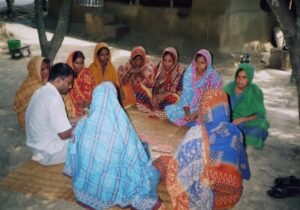
Pond Re-excavation:
According to the previous years, in the third year, provision has been kept in the project for pond re-excavation for making portable water available in the ponds, because, in the project areas, there are many derelict ponds, which have no water. A total of 6 derelict ponds have been re-excavated during the reporting period and people are getting portable water in those ponds, which are arsenic free and easy available.
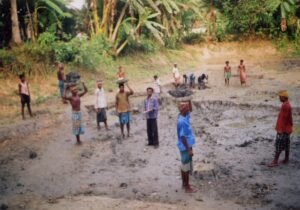
Water filter distribution:
According to the previous year, in the third year, provisions have been kept for the distribution of water filters among the organized group members for ensuring portable and pure drinking water supply among them. During the reporting period, a total of 300 water filters have been distributed among 300 families of organized group members. 50% costs have been collected and the rest 50% costs have been given from the project. Now the group members are getting portable and arsenic free water through the water filters.
Kitchen gardening:
In the project, like previous years, in the third year, provision has been kept to develop kitchen gardens among the organized group members for their nutrition deficiency reduction and to protect them from arsenic problems. A total of 150 kitchen gardens have been developed among 150 organized group members and they are cultivating different vegetable in the kitchen gardens and getting improved vegetables. Seeing their successes, other community women have been developed kitchen gardens in their homesteads and getting nutrition rich vegetables and foods.
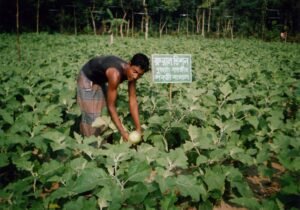
Fruit seedlings distribution:
According to the previous years, in the third year, provision has been kept to distribute fruit seedlings among the organized group members for increasing nutrition levels among the people. During the reporting period, a total of 1000 families have been provided 2000 fruit seedlings and each family is given 2 fruit trees. Each family planted 2 fruit trees in their homesteads and all the seedlings have been growing properly. Other community women have become motivated and encouraged to plant fruit seedling and plants and already many fruit plants have been planted in their fallow lands, which have grown much and soon they will give fruits to the community people.
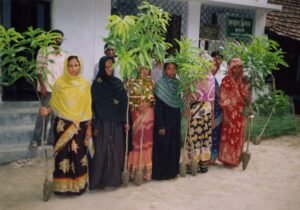
Nursery development:
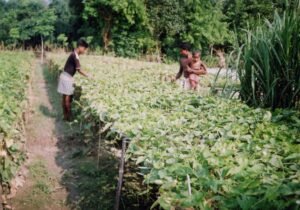
A piece of land has been identified and selected for nursery development for producing saplings and seedlings for the community people. The selected land has been developed and already different fruit, medicinal trees, and forest trees seeds have been sown and seedlings have been growing and it is hoped that in this season, seedlings can be supplied among the community people. Already many community women have developed small nurseries in their homesteads and growing different fruit trees and medicinal trees, which have been benefiting them much for medicines and earning incomes. Some people have taken nursery development as business.
Training on Arsenic issues:
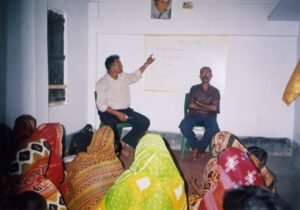
In Bangladesh arsenic has become a chronic problems and whole the country is affected by arsenic but the percentage of contamination is varying place to place. Arsenic has become a critical issue in the areas, because, arsenic has contaminated the ground water and people are drinking group water through tube wells, which has been severely affecting the people. So, during the reporting period, a total of 900 group members have been provided training on arsenic issues. According to the first year and second year, in the third year, a total of 12 batches have been conducted and each batch has been included 25 learners. They have become aware about arsenic contamination, sources of arsenic and how to prevent arsenic contamination and how to get arsenic free water. Already good performance has been found from the training, because, the trained beneficiaries are teaching others through different group meetings and personal contacts. In this way, the learning are disseminated among the group members and the community people.
Sanitation program:
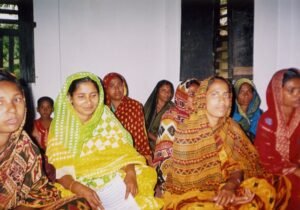
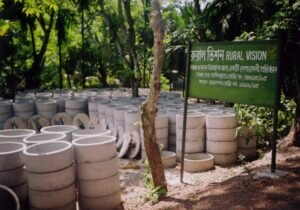
In the project areas, people were not habituated with using sanitary latrines and lack of sanitation facilities, they did not install latrines, so, different diseases were broken out due to lack of sanitation facilities and sanitation use. Moreover, poor people could not afford for sanitary latrines in their homes. So, with the help of this project, according to the previous years, in the third year, a total of 100 set of water sealed latrines have been distributed among 100 families in the project areas and they have installed those latrines, which have been used by the users and other people are becoming encouraged to use water sealed latrines. Already, awareness has developed among the poor people and they are installing water sealed latrines with their own initiatives and they are becoming habituated with latrine uses. So far 500 latrines have been installed and more latrines have been installed by the community people in the working areas with their own initiatives. Already the demand for sanitary latrines has increased and more and more people are coming to us for latrines but we have limitation to supply sanitary latrines to all.
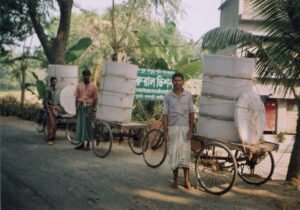
Micro-credit program:
In the rural working areas, unemployment is the main problems, because, they have no employment opportunity and income earning scopes. So, provision has been kept in the project for micro-credit support for different small income generating activities and to creating employment and income earning opportunities and to involve in productive and economic activities for increasing their purchasing capacity and self-employment opportunities in the local areas and also to ensure local resources utilization. Provision has been kept for credit support for IGAs with 10% service charge yearly with easy installment return basis. Emphasis has been given on agriculture and livestock sectors and also other productive sectors. Generally loaners are selected by the group members through weekly meetings, which have been held under the guidance of staffs. The IGAs are also selected by the group members considering, skills of the loaners, feasibility, and viability and marketing conditions of the IGAs. According to the decisions of the group meetings, loaners are selected and loan money is disbursed among the loaners with an agreement and the groups remain the guarantors for realizing the loan money and through group meetings loan installments are realized and deposited to the staffs.
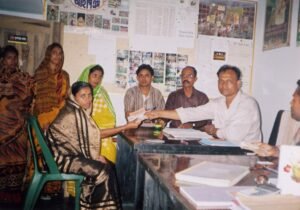
Fish and poultry loans:
A total of 50 organized group members have been provided loan support for undertaking fisheries and poultry rearing in their ponds and homesteads. The loan is quite returnable with 10% service charges with 44 equal installments within one year. The installments will be collected from their incomes. 50 organized members have developed fisheries and poultry farms and rearing fishes and poultry birds and they are getting much profit from their fish and poultry farms.
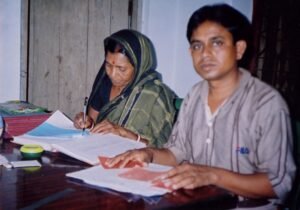
Agricultural loans:
A total of 150 organized group members have been provided loan support for undertaking agricultural activities and agricultural food production in their fields and fallow lands. The loan is quite returnable with 10% service charges with 44 equal installments within one year. The installments will be collected from their incomes. 150 organized members have developed agricultural farms in their fields and fallow lands and producing foodstuffs and they are getting much profit from their agricultural farms.
Monthly staff meeting for progress review:
In the first week of each month, the staffs have been sat for reviewing the progresses of the month, where encountered problems and difficulties have been discussed and found out solutions with collective discussions and also shared the performances and techniques of performances.
Supervision and Monitoring:
The staff members have been supervised/supervising, followed up/following up and monitored/monitoring the group activities, group members regularly. The senior staff have been supervised/supervising the activities of the field staff members, and the group members regularly. Moreover, the Executive Committee members, Director and the Project Manager have been monitored the activities on monthly basis. The monthly staff meeting and participants meeting have been arranged and reviewed the activity performances and solve the created problems. All the staffs have been submitted monthly progress reports and plan next month’s activity in this meeting.
- Results achieved (quantify them whenever possible).
The project implementation was started with achieving some set results in the community and as it is the third year of the project implementation, so, the project activities were more smooth and effective, so, due to third year’s project implementation, the following outputs and results have been achieved so far and mass awareness has been created among the people, because, first year’s project implementation helped much and the beneficiaries of the first year have helped to motivate and educate the second year’s beneficiaries in different respects.
- Community people, especially the poor targeted people have become aware and self-motivated with the implementation of the project activities.
- Changed their attitudes, mentality and become habituated with latrine and tube well water use.
- Grown self-initiatives among the community people to install latrines and tube wells with their own efforts.
- Created mass awareness among the community people on water and sanitation program and every one is interested to use pure water and sanitary latrines.
- Available arsenic free water, because, they are producing arsenic free water and using arsenic free water.
- Ensured pure and potable water supply among the beneficiaries of the second year including previous years and water problem is going to be solved and people are becoming habituated to collect and drink pure water.
- People are more or less aware and they are avoiding arsenic contaminated water and gradually arsenic problem is going to solved, because, they are not taking water from the red marked tube wells and collecting arsenic free water.
- People are aware about the sanitation problems and diseases, so, they are using sanitary latrines and diseases are reducing gradually. Demand for slab latrines has increased and community people are collecting slab latrines and using those according to the advice of the staffs.
- As the people are using tube well water which are arsenic free, so, gradually water borne diseases are reducing and arsenic diseases are reducing, which has reduced the risk of arsenic.
- Due to continuous project implementation, people have become aware about the problems of environmental degradation and contamination, so, they are taking steps to reduce pollution and contamination.
- Gradually natural resources destruction has reduced and people are planting trees of different types and enriching natural resources.
- Due to plantation of trees, and vegetables, gradually nutrition deficiency problems are reducing and they are taking plenty of nutritional foodstuffs.
- Due to skill training and credit support unemployment problems are reducing, because, they are involving different IGAs, productive and economic activities with their own initiatives, as they have realised that they should earn incomes and improve their family economic conditions.
- They are utilising their fallow resources like lands, water bodies, derelict ponds, courtyards, homesteads etc. for different purposes, so, those are utilised for production and economic purposes.
- Agricultural and livestock sectors have been emphasised and producing agricultural products and livestock, which has created employment and earning avenues for the organised group members and they are improving their family economic conditions and their purchasing capacity has increased.
- Increased and improved fisheries resources and they are producing fishes and utilising fallow ponds for production purposes.
- Gradually poverty alleviation is going to be alleviated, because, every one is well conscious and they are involved with productive, economic and income earning activities.
- The poorest class of people of the society has become aware about their development and they can find out ways of solution of local problems and participating actively and playing active role in national development, as they are aware on social, economical and environmental problems. They easily can arrange for developed lives, because, they are self-motivated, self-governed, self-initiators and self-led now and they are aware about their own duties, responsibilities and dignity.
- Ensure potable water supply among the organised beneficiaries and they community people are becoming interested for installation of the tube well and pond re-excavation for having potable water, which is arsenic free and virus free.
- Changed has made among the project participants and they are encouraged for using slave latrines to reduce their common diseases and they are using safe water and slave latrines intensively and they are also motivating others to use safe water and safe latrines, which has reduced incidence of water borne diseases.
- The targeted people have become organised and united under small savings groups and has developed unity, solidarity and cohesiveness among the organised members and their capacity has developed in different respects like decision makings, leadership, management, accounts keeping etc.
- They can identify the arsenic contaminated water and they do not use those water at all, so, reducing diseases born by drinking arsenic contaminated water.
- Created employment and income earning opportunities at local levels and they have become involved with economic, productive and earning activities and improving their family economic conditions.
- Nutrition levels have improved, because, they are producing fruits, vegetables, poultry birds, fishes, eggs, meats, etc. and consuming those for family use, so, gradually nutritional deficiency is reducing among the poor people.
- Developing self-capital, group capital and incomes of the organised people and they are taking different IGAs and earning much.
- Developed one revolving fund, which is being used for undertaking small income generating activities for the poor group members.
- Rehabilitated and established social dignity among the distressed people by creating eco-balanced environment, uplifting quality and skill ness and consciousness and making opportunity of solvency and to ensure arsenic and saline free pure drinking water.
Personnel and Social impacts:
The project implementation has also created personnel and social impacts in the community, which have been reflected through their changed behaviour, attitudes, and practices. Person to person, these changed affairs are disseminating among the community people. In the previous years, RV has been contributed much and third year that efforts have been continue more effectively and appropriately basing the first year’s learning and gained skills, so, RV has been tried to continue the project activities fruitfully and effectively during the reporting period i.e. in the second year. All the staff members of the project have been continued the activities as usual considering the project plan and target, as it was the second year, so, the project activities were more smooth and appropriate. So, mainly old group nurturing, motivation and training courses for the staff and the group members, latrine installation, and medical services were carried out. Implementation of these activities have created lot of changes and improved in lives styles of the beneficiaries as well as the community people individually and collectively in the water logging areas.
At present the group members are more aware one health and practice health issue in their practical life and improve their personal health, sanitation status, and ensure safe deliveries. The group members are organised and capable then before. Unity and solidarity have developed among the women members. They have become more cooperative and have developed fellow feeling. Women are not neglected and deprived. They have become the income sources of the families and well permitted to out of the families. Now they are attending different meetings, workshops, seminars and gatherings and participating in different social activities. Each member has own savings in the group funds and also has group funds with the organisation. Ownership has developed in the families. The male members of the families involve their female partners in different decision-makings of the family affairs. Relation between husband and wife has developed and mutually they perform their family economic activities. The women have become more conscious, skilled and efficient in management, accounts keeping, management, so, their families have become well run and groups have become well run, well managed and well led. In the family and community, they are getting sufficient social values.
The women are involved in different IGAs and earning incomes and supplementing their families. Seeing more other community women are involving in different IGAs and helping their families. Due to tube well installation and latrine installation, they health status has improved and they are well aware about their health. Each house is with different tender plant, which has improved the environmental condition.
- What difficulties have you encountered? How have you resolved them?
No remarkable difficulties or problems were encountered during the third year’s project implementation, even in the previous years also, as Rural Vision has been working in the project areas for long time and the activities have been accepted by the community people and had good acceptance, so, already it has created a good and favourable atmosphere in the project area through its good and beneficial activities and the activities of the RV are highly accepted by the community people, local administrations, government departments and local elite and leaders. So, they are cooperating the organisation to implement any project activities for the alleviation of the poverty and solution of the problems. Moreover, RV has wide communication and interactions with the community people so, no serious difficulty has been encountered so far. Still the total atmosphere of the project area is quite in favour of the organisation. But some minor difficulties have been encountered, which are as follows:
- High numbers of beneficiaries have become interested to participate with the project activities, which was uncontrollable. But through motivation and discussions, the problem was solved and giving hope that, gradually they will be included in future.
- High demand for credit support undertaking small income generating activities but the problem has been solved through motivation and discussion and giving hope for future inclusion.
- Financial problems because of late commitment and late availability of project fund.
- Many pond owners have come to us for re-excavating their ponds and for fish culture but we have limitation and this problem has been solved through motivation and discussion.
Apart from these, some problems like political unrest, fundamentalists’ rising in the areas, natural calamities have hampered the planned project activities.
- What means/resources have you used
To implement the project activities successfully and fruitfully, the following resources have been used during the implementation period:
- Qualified, trained and experienced manpower.
- Project approved funds.
- Technologies, experiences, expertise etc.
- Local resources like ponds, homesteads, agricultural lands etc.
- Survey sheets, tabulation sheets etc.
- Motor bike and bicycles.
- Local experts like Upazilla Agriculture Officer, Livestock Officer etc.
- Seedlings, tree saplings, vegetable seeds, seedlings etc.
- Poultry birds, ducks, fishes, fingerlings etc.
- Different appropriate fertilizers.
- Slave latrines, tube wells, filters etc.
Conclusion:
We may conclude that the third year’s project implementation was more smooth, effective and successful, because, the staffs have learnt a lot from the previous years and developed efficiencies. So, all above selected project activities of the third year have been implemented smoothly and effectively, because, the staff have become more skilled, experienced and efficient than previous years, as they have face difficulties and problems in the first year and learnt from those problems and this year, they were very much aware and activities in project implementation during the reporting period. However, we have implemented the project activities in limited way smoothly and effectively and benefited many poor people and community people, which has created a very positive impression among the community people, government departments and local administrations, who cooperated the project implementation much.
At this moment, we pay our heartiest thanks and gracefulness to the Manos Unidas-Spain and the representatives, who have been supporting us to implement the above project and providing us valuable suggestions and advice to improve our program implementation at the field levels.
Taking previous experiences, ideas, skills and learning, all sorts of initiatives and efforts have been provided for making the project implementation effective and fruitful. We hope, the sincere staff and Executive Committee members of RV could be able to make the project a success and sustainable in future gradually with the support benevolent donor Manos Unidas-Spain. So, we anticipate continuous support from Manos Unidas-Spain and request to Manos Unidas-Spain to establish the poor water logging areas people as well as RV. Hope our mutual cooperation and supports will be continued in future march of RV for the well being of the rural water logging area poor beneficiaries as well as the community people.
July 15,2025
Executive Director
Rural Vision.